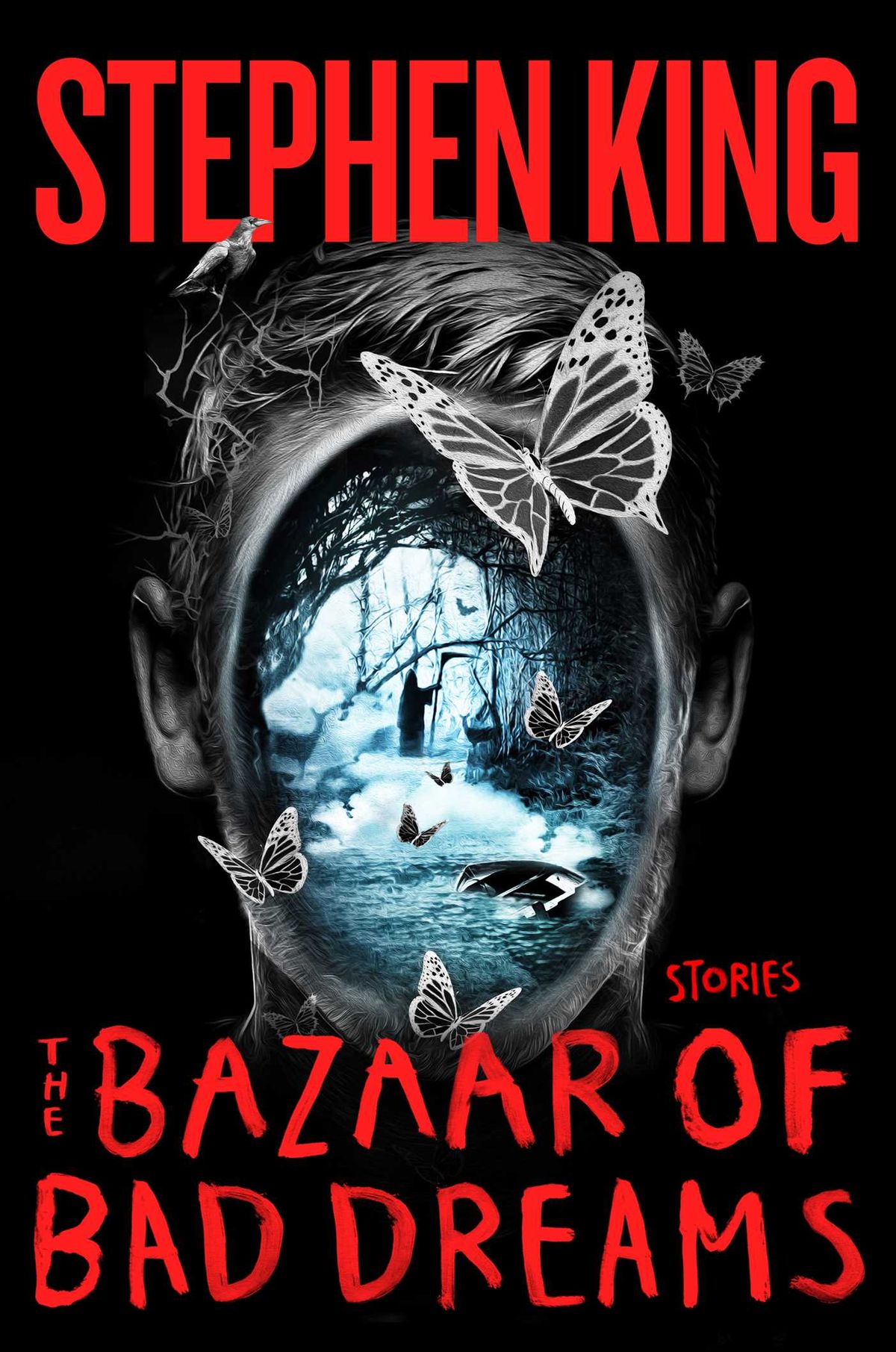
The Bazaar Of Bad Dreams ( book ) … Stephen King

The Bazaar Of Bad Dreams ( book ) ... Stephen King

Stephen King, the top seller in the horror book Bazaar, remains an excellent writer in the technical sense. It’s his mundane imagination; a lot of his tales are simply boring; and corny sense of humor that might have you demanding a refund. Even the best short stories in this collection; Premium Harmony and The Little Green God Of Agony; are merely decent.

my rating : 2 of 5

2015

video review : Gino Jennings and Mr Vegas debating about Christian women wearing makeup and other fashion accessories

video review : Gino Jennings and Mr Vegas debating about Christian women wearing makeup and other fashion accessories

This Kingston YMCA debate about whether or not The Bible permits women to wear makeup and other fashion accessories doesn’t really get interesting until it drops the formalities. That happens after Mr Vegas does a speech condemning Gino Jennings for referring to said women as “whores”, which he considers sexist. Jennings says he’s been misrepresented but makes it clear that, as far as he’s concerned, The Bible does, in fact, forbid women “walking around looking like Jezebel”.

The underlining premise, that God is real and what The Bible says is true in the first place, makes for a ridiculous argument either way, but Jennings comes across as the obvious winner. That’s partly because it’s his church they’re debating in. He’s also more charismatic. Vegas repeats himself like a retard. The idiot reading for Jennings does the same. “Disputing daily,” he chants with a brain of mush. The debate ends with Vegas being ushered (thrown) out to a round of applause.

my rating : 4 of 5

2018

Quitters Never Win [ My Life In UFC ] : Michael Bisping talking about his fight with Anderson Silva

Quitters Never Win [ My Life In UFC ] : Michael Bisping talking about his fight with Anderson Silva

When people say Anderson “The Spider” Silva is the greatest pound-for-pound fighter in the history of the UFC, they are just reading a label that’s been attached to the Brazilian since 2006. The term “P4P” and even his statistics – record longest title reign in UFC history (2,457 days), record longest winning streak in UFC history (16), record number of knockdowns in UFC history (17), and on and on – don’t really describe how good a fighter he was.

Only those of us who’ve swapped talent and bad intentions with him can really explain how outstanding a prizefighter Silva really was. And we don’t do it with words. Rich Franklin’s misshapen nose, Chael Sonnen’s crushed ego, Forrest Griffin’s shattered pride, and the zagged scars on my brow tell the story.

Going into the fight on February 27, 2016, I knew I was nearing the end of my time as a fighter. My body was turning on me, and I knew the Silva fight would deliver the final verdict on my entire career. I knew the sport’s self-appointed historians had already drafted the summary: “Michael Bisping, perennial contender, BUT couldn’t win the Big One” and this was my last chance to force a rewrite.

Anderson wouldn’t just be looking for a win; I knew that for a fact. The former champ’s ego would demand the full restoration of his near-mythical status that only a spectacular knockout would deliver.

“It took Chael Sonnen two years of non-stop bullshit to finally anger Anderson,” the Spider’s manager Ed Soares said during fight week. “It’s taken Bisping less than two months.”

No doubt about it, I’d worked fast. I’d blasted him about his 2015 failed drugs tests and his excuse he’d used a Thai sex pill (“Did it work, then?” I asked the GOAT, “Do you get an erection or not?”). I got into his face every chance I got – at the press conference, at a photocall at Tower Bridge in London, when we passed each other at the UFC host hotel.

So, why did I go all out to piss off the greatest fighter of all time?

Simple, I respected him too much and Silva preyed on respect. For years, I’d watched opponents fail to challenge him to the best of their ability because they went in going, “Oooh, it’s the legendary Anderson Silva.”

Meanwhile, Silva – a master mind-gamer – would be using meticulous deference (the bowing and all that nonsense) to con opponents into “respectful” martial arts contests that best suited his style. Then, inevitably, he spring the trap and smash them to a brutal defeat.

The atmosphere crackled with as the first round began in front of a long since sold out London O2 Arena.

There was no way to beat Silva on the back foot, I knew. I had to take the center of the Octagon right away, be intelligently aggressive and push the pace. Silva would counter and hurt me, he’d play his gamesmanship and make me miss, he’d pretend nothing I did was working but – whatever happened – I knew I could not let him blunt my aggression.

I landed first, and not just a single shot but a combination. Silva switched from his natural orthodox stance to his preferred southpaw, back and forth, back and forth, and I could see him performing calculations behind his eyes. He threw – and landed – several punches. The speed was equal to the accuracy. I had no trouble landing on him, though. I kept pressing him backwards, landing ones, twos, and even several three-punch combinations. He wasn’t as hard to hit as I had expected, although hitting him with the same combination or setup twice proved difficult.

As if a timer had gone off, Silva surged forward in the last thirty seconds. I had to stand my ground – and did – clipping him with a big left hook that staggered him as the buzzer sounded.

As the horn blared out to end my 10-9 round, Anderson attached a goofy grin on his face and came in to give me a hug. It was another one of his psychological set pieces.

Congratulations on winning a round against the great Anderson Silva, his embrace inferred. I shoved him backwards – hard – with both hands and told him what he could use a Thai sex pill for.

You are not coming to my country and condescending me in front of my own people. I am just getting started with you – see you back here in one minute.

Anderson reached deeper into his bag of magic tricks in the second.

His reflexes were extraordinary. He could go from naught to nuclear in a split second. But one of my long-held suspicions was already confirmed – he relied on discouraging opponents from throwing combinations as much as his own reflexes to avoid them. I’m a stubborn bastard at the best of times, and I trusted my cardio and skillset to land strike numbers three, four, and five even if numbers one and two missed.

This was no unmasking, though. Silva was every bit as good as he’d looked during his championship reign. On several occasions, his anticipation of my attacks was so exact it gave me the disquieting sensation we were doing fight-movie choreography. I had to push such thoughts away and keep the pressure on.

A minute into the second round, Silva backed himself against the fence, squared his hips into a normal standing posture and waved me in.

“Come on, man,” he said in that Michael Jackson voice of his, expecting me to play the game of firing punches while he dodged like Keanu Reeves in the Matrix movies.

Unfortunately for Anderson I’d seen this ruse before (most memorably vs. Stephan Bonnar in 2012). His squared-up stance made dodging punches easier, not harder, and the proximity to the fence all but ensured no one would try a full-power kick and risk catching their toes in the chain links.

It was a con, not unlike those can’t-win carnival games, and I’d have none of it. I stepped back three paces to the center of the Octagon, put my hands on my hips and shot Silva an unimpressed look.

I’m not one of the overawed challengers you’ve clowned and beaten for years, I shook my head.

The British fans began to play their part, too, cheering my bravado and letting Silva know he was a long way from Brazil.

The second round was going even better than the first for me. Silva knew it, too, and in the final minute he dropped down off his toes and loaded more TNT in his gloves. Silva pressed forward but I sent him into reverse with a push kick. Then I flicked a jab on my way inside and – BAM! – a drum-tight left hook buzzed him badly. Before he could recover any equilibrium, I twisted my hips into a right cross and then arched another left to the jaw. BAM-THUD-BOOM!

I’d decked him! He was down, hurt!

The British fans roared like the place had caught fire. I followed Anderson to the ground – taking an up kick from the lightning-fast Brazilian on the way down – into his guard and began hacking away at him like a madman.

(The up kick was incredible, I have to add. I could see in his eyes he was rocked – but this man is such an instinctual fighter he still fired and landed a counter.)

I had no fear of his BJJ guard. I wish I’d got him down earlier, because the thirty seconds of ground and pound were my most dominant of the fight so far. I smacked him with both fists and elbows until the round ended.

The fans thundered noise around the cavernous arena at the end as I walked to my corner. I felt great. It was hard; I was a little bloodied already – but I was putting on the performance of my life. I was two rounds up, 100 percent. I just had to keep focused like the edge of a scalpel.

“You’re doing well,” my coach Jason Parillo said. “Stay focused.”

Anderson shot off his stool determined not to lose a third straight round. He was coldly aggressive, less content to give ground and, after getting hurt and dropped by the left hook, he wore his shoulders locked in formation either side of his chin.

Silva’s punches and kicks were as accurate and slicing as the strokes of a diamond cutter. He thudded a kick into my midsection. I refused to back off. I chased Silva to the fence and landed three of a four-punch combination. Silva’s right fist sent sweat bouncing from my head. Moments later I felt his nose stab between my middle knuckles as a right cross crunched into his face.

“This fight is living up to the hype,” commentator John Gooden stated.

BISPING! BISPING! BISPING! BISPING! rumbled around the arena.

Anderson slammed his left knee through my defenses and into my guts. He chased me along the fence. We exchanged shots and, somehow, my mouthpiece fell out. I pointed the ref’s attention to it, lying on the canvas and Herb Dean went to retrieve it.

For a split second I thought about the long-term consequences of professional cage fighting. I wanted my mouthpiece back in before my incisors were knocked out or my face was grated from the inside out.

“Mouthpiece!” I said to the referee. The Spider saw my preoccupation and attacked, blasting into the air like a rocket and driving his knee directly into my face. I crumpled to the canvas, my knee twisted underneath my weight with blood gushing from the bridge of a broken nose. Before I’d finished falling, Anderson had landed, turned, and was walking towards the center of the Octagon celebrating.

BEEEEEP!

The round ended two seconds after Silva’s knee had struck.

If that had been the end of the fight, it would have haunted me for the rest of my life. I’d fought an intelligently aggressive fight for 14 minutes and 58 seconds, hurting the GOAT in the first round, dropping him in the second, and out-striking him 63-36. And then I’d completely disengaged from the task and invited a calamity to happen.

But it wasn’t the end of the fight. My face felt collapsed, but I was still with it.

“I’m not knocked out!” I told Herb Dean. “I’m okay!”

One of those statements was more accurate than the other, but Dean confirmed I wasn’t out of the fight.

“No, you’re not knocked out,” Dean said to me clearly. “End of round.”

Twelve feet away, Silva had thrown himself into celebration. Somehow, his entire team burst into the Octagon to join him. Confused commissioners wandered after them like emasculated grandparents trying to persuade kids it’s bedtime.

Silva then leapt up and straddled the Octagon fence and celebrated even as officials on both sides of the mesh – including UFC president Dana White – pleaded with the excited Brazilians to accept the fight was not over.

Somehow, his manager Ed Soares was in the Octagon speaking with him but, at the opposite gate, my teams were refused entry by security. Bags of blood gushed out of the cuts and I badly needed the assistance of a cutman and my team. A cutman appeared above me momentarily, only to be marched away by some random official without so much as applying grease to my lacerations.

Finally, my team sprinted over to me. They were told I needed to return to my corner. There’s no such rule – but the Octagon was a complete riot by now.

“You’ve still got this,” Jason said calmly. “This is still your fight.”

When I raised my head once more the Octagon had been cleared. Anderson Silva was pacing for the fourth round to begin. I rose off my stool and felt at sea.

“Michael Bisping does not look like himself,” commentator Dan Hardy told the television audience. “He looks dazed. He looks confused.”

In fact, mentally/cognitively I felt okay – physically I was a car wreck. My right leg trailed behind me as I moved across the canvas; my full weight had collapsed on top of my bad knee and the bottom half of my leg was numb. My nose was broken and I couldn’t breathe through its misshapen nostrils for the rest of the night.

Let me do this… I thought behind my bruised eyes.

That’s when I heard it. The roar!

The roar of the British fans rolling tighter and tighter until I could feel the soundwaves moving the hairs on my forearms. A roar that gathered energy to me. The fans still believed I had this! I can’t describe what that cheer did for me. Whatever confidence Jason had instilled, whatever self-belief I’d dragged from the bottom of my soul – these people doubled and then tripled it.

I let the referee’s signal release me. I went out and took the fight to Anderson Silva all over again.

We had both reached the championship rounds hurt and tired. The fight had become a battle of wills. I pumped out combinations: an inside leg kick followed by a foot stomp into a jab, a right cross, a left hook, a right hook, and another left.

“Great work by Michael Bisping! His hands are really fast and Anderson Silva is struggling to keep up with him,” Hardy said on color commentary.

Silva remained against the cage, looking for a big counter, as I kept the pressure up. I switched up my attacks constantly, trying to make it harder for him to read what I was doing next.

BISPING! BISPING! BISPING! BISPING! BISPING! The fans were heard again.

Silva speared at my face with his right half a dozen times during the fourth round, puncturing my already bruised features above and below the left eye. With the cuts I’d already sustained, my entire face and neck were awash with blood.

Once again, he launched a lightning raid in the final seconds. A corkscrew uppercut + left cross combination buzzed me and opened the gash under my eye a little wider. I timed his next attack and sent him careening backwards with a right hand. The round ended.

The fourth round had been my most active of the fight; I threw 80 strikes, all but 12 of them power punches and kicks, and out-landed Silva massively. I was sure I’d taken a decisive round.

“You are winning this fight, Mike!” Jason said. “He’s looking to counter with something big. Keep smart pressure on him.”

The cutman could do nothing with any of the axe wounds on my face. In the seconds before the fifth and final round I looked up at one of the big screens suspended 140 feet in the air. There was my face, shredded raw. Every blink smeared the blood across my eyeball.

Silva went for the knockout right away – I barely blocked two head kicks thrown just moments apart.

Unable to breathe through my nose, I had to curl my lips and drag air over my mouthpiece for long stages of the fight. My oxygen levels must have plummeted, because I was more tired in that last round vs. Anderson than in any in my career.

The Brazilian was fighting on fumes, too. I could see him biting down on his mouthpiece and flaring his nostrils as he stalked forward, throwing every last watt of power into his strikes.

The legend whipped a big left cross in. I matched him with a hooked right cross that sent him backwards against the cage. I gave chase but missed the follow-up and – BANG! – I was sent staggering backwards by something.

Silva had uncorked the front kick to the jaw that had so iconically laid out Vitor Belfort. I was hurt and Anderson went for broke. His knee thudded into my guts and then my chin. He kicked my nose and the already contorted cartridge snapped. Everything fired was intended to land with a fight-finishing detonation.

But I refused to go backwards for long. I landed a heavy one-two combination to his mouth. My left hook landed once, twice, and a third time. Then he clubbed my jaw with that Filipino back fist. I heard him gasp as I swung a kick to his midsection.

It felt like we’d be fighting forever and then the round–the fight–ended.

Exhaustion hit me like a tidal wave. I’d spent all of myself. Nothing was left.

You never know when close fights go to the scorecards, but all three judges scored it 48–47 for me. That moment was overwhelming. The swelling and blood gave my tears cover as they streaked out of my eyes. I was overcome with emotion. This was my world title win, the Big One.

I was one of the best fighters in the world. No one would be able to take that away from me again.

After celebrating with my family for a few moments, I thanked the fans who’d lifted me up for that fourth round. Honestly, I’d never needed them more than I had in those lonely moments.

“These people – they give me the power,” I told my old training partner Dan Hardy, who was holding a microphone in the middle of the Octagon. “I’m just a guy from a very normal background and you guys have been in my corner every single time. Thank you so much.”

2019

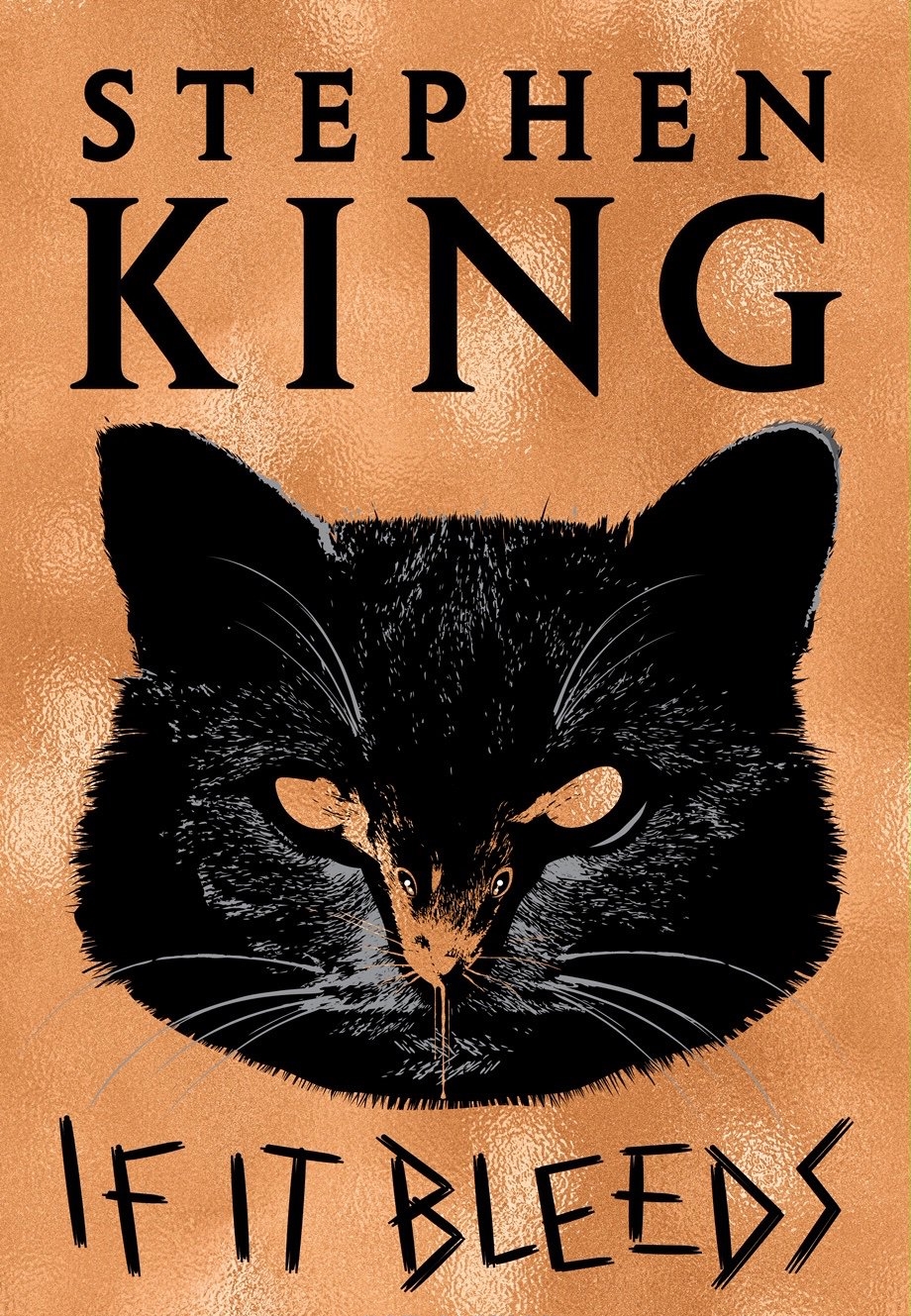
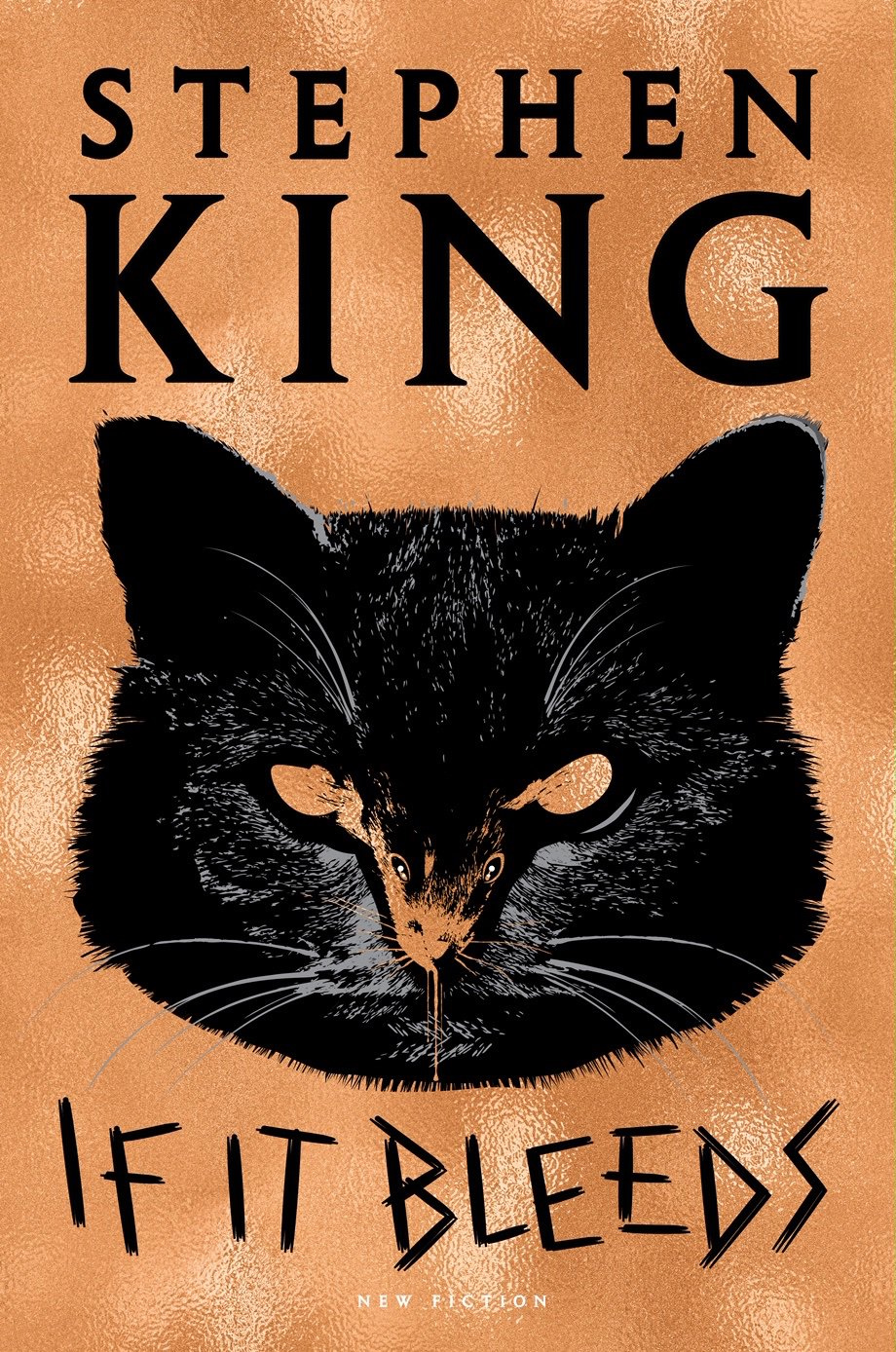
If It Bleeds ( book ) … Stephen King

If It Bleeds ( book ) ... Stephen King

“If It Bleeds, it leads,” the old news trope goes, but what if it bores? That’s the problem with this book; a set of Stephen King novellas à la Full Dark No Stars, Four Past Midnight and Different Seasons. The worst is The Life Of Chuck; a fictional biography about a man I couldn’t care less about.

The best is Rat, which seems like it’s going to be a decent story; the headline here reads something like Novelist With Flu Stuck In Cabin During Killer Cyclone; until its ridiculous title character comes into play. It’s Stephen King’s preference for the strange and supernatural that ruins this one.

Mr Harrigan’s Phone, about a boy gifting a dying “luddite” with an iPhone, plods along drearily, though John Harrigan is probably the most interesting character If It Bleeds has to offer. The silly title bit, which stars Holly Gibney and follows The Outsider, is about a shapeshifting news reporter.

my rating : 2 of 5

2020
 

richardhdent :

Look forward to reading it!

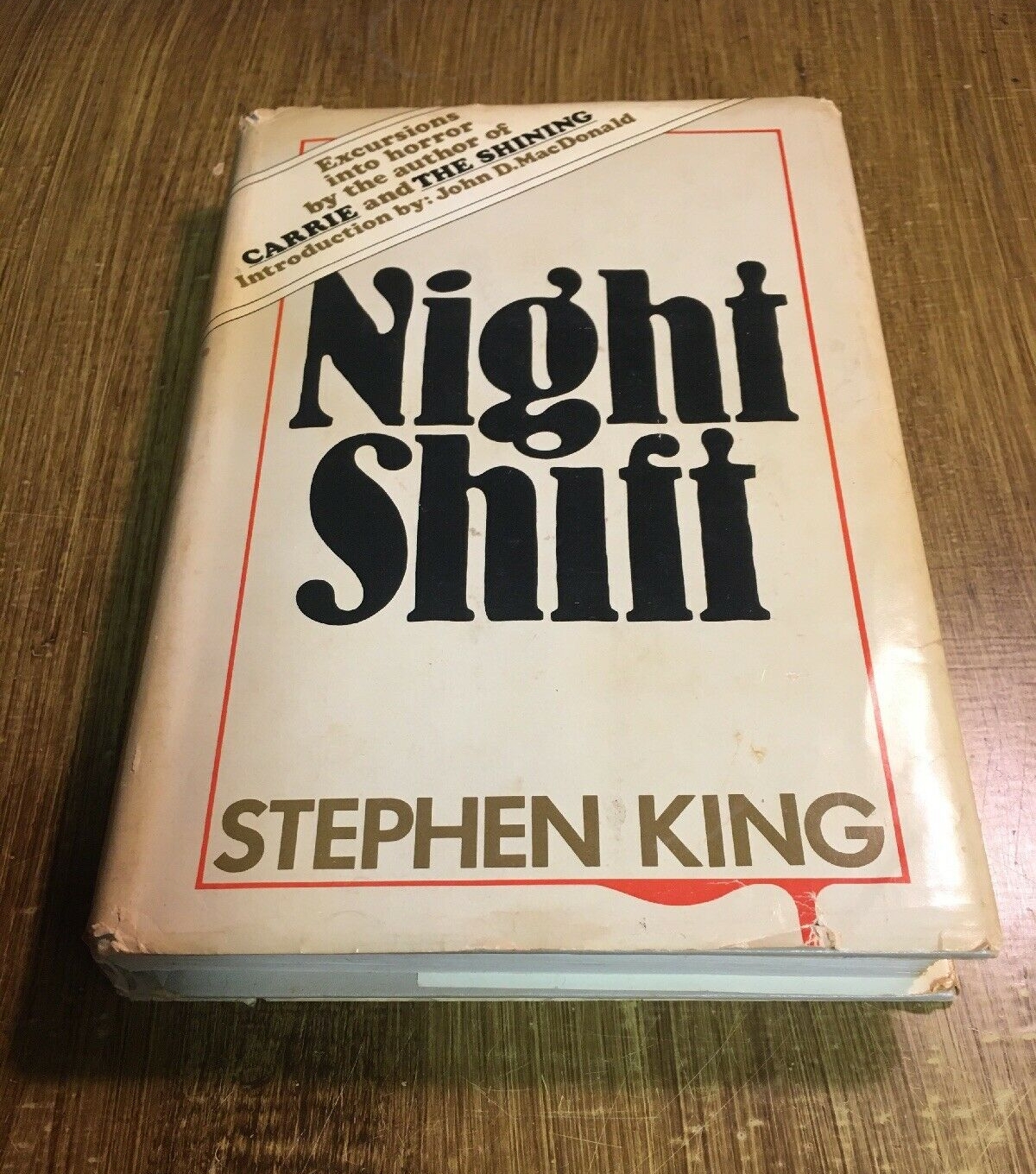
Night Shift ( book ) … Stephen King

Night Shift ( book ) ... Stephen King

Perhaps it’s just my finickiness, but the inclusion of Night Surf and Graveyard Shift seem to clash with the title of this book; a set of mostly previously published Stephen King stories from Cavalier and other monthly magazines.

They’re promoted as horror and most are indeed eerie while The Last Rung On The Ladder and The Woman In The Room, the latter of which seems tacked on after what would’ve been Salem’s Lot bookends, aim for mere poignancy.

Stephen King stories, at least these, are usually best during the build-up. The endings can be rather anticlimactic; namely in the cases of Quitters Inc, The Boogeyman and The Lawnmower Man. Strawberry Spring is downright stupid.

my rating : 3 of 5

1978

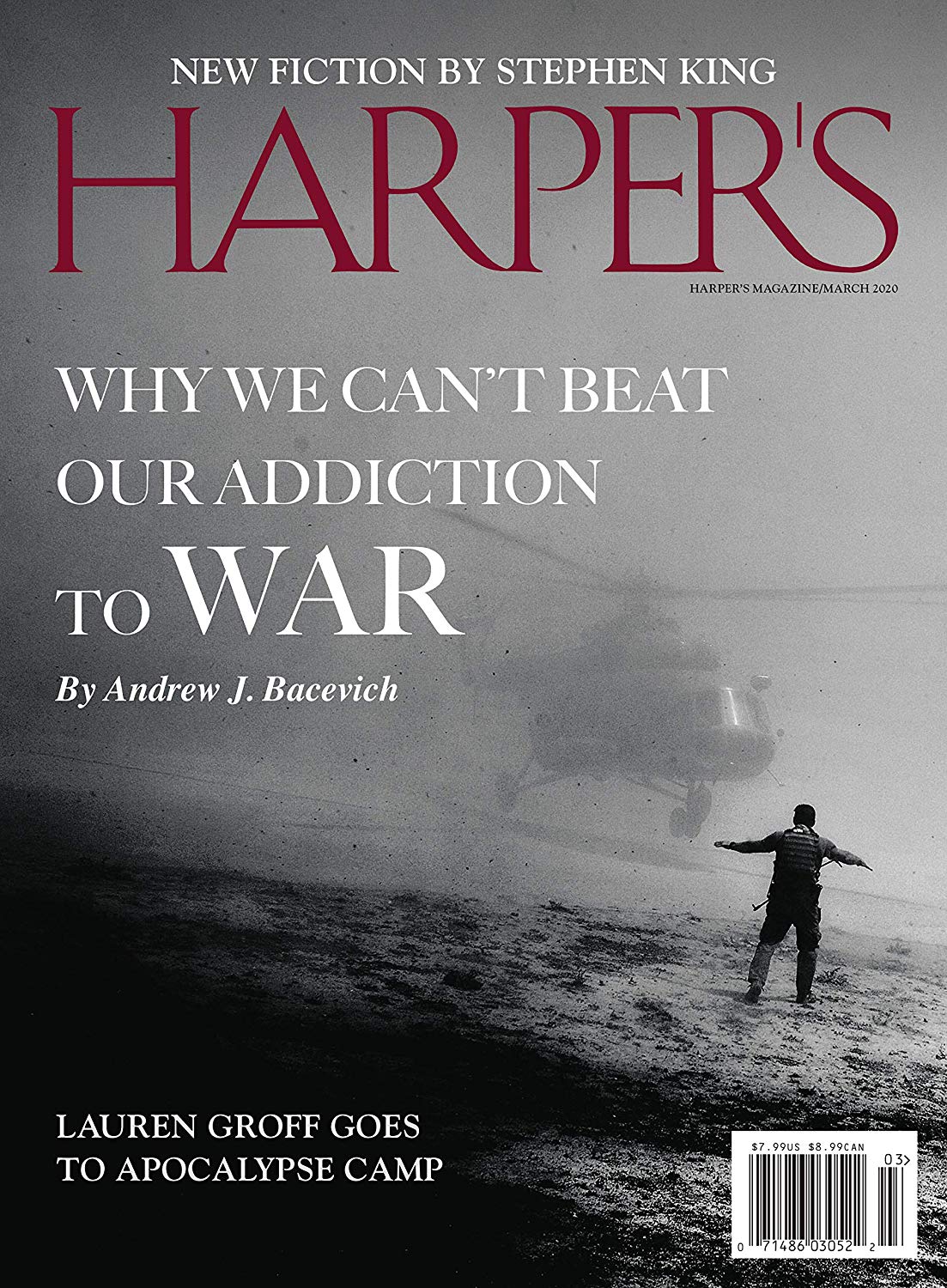
a Stephen King story from Harper’s : The Fifth Step

a Stephen King story from Harper's : The Fifth Step

Harold Jamieson, once chief engineer of New York City’s sanitation department, enjoyed retirement. He knew from his small circle of friends that some didn’t, so he considered himself lucky. He had an acre of garden in Queens that he shared with several like-minded horticulturists, he had discovered Netflix, and he was making inroads in the books he’d always meant to read. He still missed his wife—a victim of breast cancer five years previous—but aside from that persistent ache, his life was quite full. Before rising every morning, he reminded himself to enjoy the day. At sixty-eight, he liked to think he had a fair amount of road left, but there was no denying it had begun to narrow.

The best part of those days—assuming it wasn’t raining, snowing, or too cold—was the nine-block walk to Central Park after breakfast. Although he carried a cell phone and used an electronic tablet (had grown dependent on it, in fact), he still preferred the print version of the Times. In the park, he would settle on his favorite bench and spend an hour with it, reading the sections back to front, telling himself he was progressing from the sublime to the ridiculous.

One morning in mid-May, the weather coolish but perfectly adequate for bench sitting and newspaper reading, he was annoyed to look up from his paper and see a man sitting down on the other end of his bench, although there were plenty of empty ones in the vicinity. This invader of Jamieson’s morning space looked to be in his mid to late forties, neither handsome nor ugly, in fact perfectly nondescript. The same was true of his attire: New Balance walking shoes, jeans, a Yankees cap, and a Yankees hoodie with the hood tossed back. Jamieson gave him an impatient side-glance and prepared to move to another bench.

“Wait,” the man said. “I sat down here because I need a favor. It’s not a big one, but I’ll pay.” He reached into the kangaroo pouch of his hoodie and brought out a twenty-dollar bill.

“I don’t do favors for strange men,” Jamieson said, and got up.

“But that’s exactly the point—the two of us being strangers. Hear me out. If you say no, that’s fine. But please hear me out. You could . . . ” He cleared his throat, and Jamieson realized the guy was nervous. Maybe more, maybe scared. “You could be saving my life.”

Jamieson considered, then sat down, but as far from the other man as he could while still keeping both butt cheeks on the bench. “I’ll give you a minute, but if you sound crazy, I’m leaving. And put your money away. I don’t need it, and I don’t want it.”

The man looked at the bill as if surprised to find it still in his hand, then put it back in the pocket of his sweatshirt. He put his hands on his thighs and looked down at them instead of at Jamieson. “I’m an alcoholic. Four months sober. Four months and twelve days, to be exact.”

“Congratulations,” Jamieson said. He guessed he meant it, but he was even more ready to get up. The guy seemed sane, but Jamieson was old enough to know that sometimes the woo-woo didn’t come out right away.

“I’ve tried three times before and once got almost a year. I think this might be my last chance to grab the brass ring. I’m in AA. That’s—”

“I know what it is. What’s your name, Mr. Four Months Sober?”

“You can call me Jack, that’s good enough. We don’t use last names in the program.”

Jamieson knew that, too. Lots of people on the Netflix shows had alcohol problems. “So what can I do for you, Jack?”

“The first three times I tried, I didn’t get a sponsor in the program—somebody who listens to you, answers your questions, sometimes tells you what to do. This time I did. Met a guy at the Bowery Sundown meeting and really liked the stuff he said. And, you know, how he carried himself. Twelve years sober, feet on the ground, works in sales, like me.”

He had turned to look at Jamieson, but now he returned his gaze to his hands.

“I used to be a hell of salesman—for five years I headed the sales department of . . . well, it doesn’t matter, but it was a big deal, you’d know the company. Now I’m down to peddling greeting cards and energy drinks to bodegas in the five boroughs. Last rung on the ladder, man.”

“Get to the point,” Jamieson said, but not harshly; he had become a little interested in spite of himself. It was not every day that a stranger sat down on your bench and started spilling his shit. Especially not in New York. “I was just going to check on the Mets. They’re off to a good start.”

Jack rubbed a palm across his mouth. “I liked this guy I met at the Sundown, so I got up my courage after a meeting and asked him to be my sponsor. In March, this was. He looked me over and said he’d take me on, but only on two conditions: that I do everything he said and call him if I felt like drinking. ‘Then I’ll be calling you every fucking night,’ I said, and he said, ‘So call me every fucking night, and if I don’t answer talk to the machine.’ Then he asked me if I worked the Steps. Do you know what those are?”

“Vaguely.”

“I said I hadn’t gotten around to them. He said that if I wanted him to be my sponsor, I’d have to start. He said the first three were both the hardest and the easiest. They boil down to ‘I can’t stop on my own, but with God’s help I can, so I’m going to let him help.’ ”

Jamieson grunted.

“I said I didn’t believe in God. This guy—Randy’s his name—said he didn’t give a shit. He told me to get down on my knees every morning and ask this God I didn’t believe in to help me stay sober another day. And if I did, he said for me to get down on my knees before I turned in and thank God for my sober day. Randy asked if I was willing to do that, and I said I was. Because I’d lose him otherwise. You see?”

“Sure. You were desperate.”

“Exactly! ‘The gift of desperation,’ that’s what AAs call it. Randy said if I didn’t do those prayers and said I was doing them, he’d know. Because he spent thirty years lying his ass off about everything.”

“So you did it? Even though you don’t believe in God?”

“I did it and it’s been working. As for my belief that there’s no God . . . the longer I stay sober, the more that wavers.”

“If you’re going to ask me to pray with you, forget it.”

Jack smiled down at his hands. “Nope. I still feel self-conscious about the on-my-knees thing even when I’m by myself. Last month—April—Randy told me to do the Fourth Step. That’s when you make a moral inventory—supposedly ‘searching and fearless’—of your character.”

“Did you?”

“Yes. Randy said I was supposed to put down the bad stuff, then turn the page and list the good stuff. It took me ten minutes for the bad stuff. Over an hour for the good stuff. When I told Randy, he said that was normal. ‘You drank for almost thirty years,’ he said. ‘That puts a lot of bruises on a man’s self-image. But if you stay sober, they’ll heal.’ Then he told me to burn the lists. He said it would make me feel better.”

“Did it?”

“Strangely enough, it did. Anyway, that brings us to this month’s request from Randy.”

“More of a demand, I’m guessing,” Jamieson said, smiling a little. He folded his newspaper and laid it aside.

Jack also smiled. “I think you’re catching the sponsor-sponsee dynamic. Randy told me it was time to do my Fifth Step.”

“Which is?”

“ ‘Admit to God, to ourselves, and to another human being the exact nature of our wrongs,’ ” Jack said, making quote marks with his fingers. “I told him okay, I’d make a list and read it to him. God could listen in. Two birds with one stone deal.”

“I’m thinking he said no.”

“He said no. He told me to approach a complete stranger. His first suggestion was a priest or a minister, but I haven’t set foot in a church since I was twelve, and I have no urge to go back. Whatever I’m coming to believe—and I don’t know yet what that is—I don’t need to sit in a church pew to help it along.”

Jamieson, no churchgoer himself, nodded his understanding.

“Randy said, ‘So walk up to somebody in Washington Square or Central Park and ask him to hear you list your wrongs. Offer a few bucks to sweeten the deal if that’s what it takes. Keep asking until someone agrees to listen.’ He said the hard part would be the asking part, and he was right.”

“Am I . . . ” Your first victim was the phrase that came to mind, but Jamieson decided it wasn’t exactly fair. “Am I the first person you’ve approached?”

“The second.” Jack grinned. “I tried an off-duty cab driver yesterday and he told me to get lost.”

Jamieson thought of an old New York joke: Out-of-towner approaches a guy on Lexington Avenue and says, “Can you tell me how to get to City Hall or should I just go fuck myself?” He decided he wasn’t going to tell the guy in the Yankees gear to go fuck himself. He would listen, and the next time he met his friend Alex (another retiree) for lunch, he’d have something interesting to talk about.

“Okay, go for it.”

Jack reached into the pouch of his hoodie, took out a piece of paper, and unfolded it. “When I was in fourth grade—”

“If this is going to be your life story, maybe you better give me that twenty after all.”

Jack reached into his hoodie with the hand not holding his list of wrongdoings, but Jamieson waved him off. “Joking.”

“Sure?”

Jamieson didn’t know whether he was or not. “Yes. But let’s not take too long. I’ve got an appointment at eight-thirty.” This wasn’t true, and Jamieson reflected that it was good he didn’t have the alcohol problem, because according to the TV meetings he’d attended, honesty was a big deal if you did.

“Keep it speedy, got it. Here goes. In fourth grade I got into a fight with another kid. Gave him a bloody lip and nose. When we got to the principal’s office, I said it was because he’d called my mother a dirty name. He denied it, of course, but we both got sent home with a note for our parents. Or just my mom in my case, because my dad left us when I was two.”

“And the dirty name thing?”

“A lie. I was having a bad day and thought I’d feel better if I got into a fight with this kid I didn’t like. I don’t know why I didn’t like him—I guess there was a reason, but I don’t remember what it was. Only that it set a pattern of lying.

“I started drinking in junior high. My mother had a bottle of vodka she kept in the freezer. I’d swig from it, then add water. She finally caught me, and the vodka disappeared from the freezer. I knew where she put it—on a high shelf over the stove—but I left it alone after that. By then it was probably mostly water, anyway. I saved my allowance and chore money and got some old wino to buy me nips. He’d get four and keep one. I enabled his drinking. That’s what my sponsor would say.”

Jack shook his head.

“I don’t know what happened to that guy. Ralph, his name was, only I thought of him as Wretched Ralph. Kids can be cruel. For all I know, he’s dead and I helped kill him.”

“Don’t get carried away,” Jamieson said. “I’m sure you have stuff to feel guilty about without having to invent a bunch of might-have-beens.”

Jack looked up and grinned. When he did, Jamieson saw that the man had tears in his eyes. Not falling, but brimming. “Now you sound like Randy.”

“Is that a good thing?”

“I think so. I think I’m lucky I found you.”

Jamieson discovered he actually felt lucky to have been found. “What else have you got on that list? Because time’s passing.”

“I went to Brown and graduated cum laude, but mostly I lied and cheated my way through. I was good at it. And—here’s a big one—the student adviser I had my senior year was a coke addict. I won’t go into how I found that out, like you said, time’s passing, but I did, and I made a deal with him. Good recommendations in exchange for a key of coke.”

“As in kilo?” Jamieson asked. His eyebrows went up most of the way to his hairline.

“That’s right. He paid for it and I brought it in through the Canadian border, tucked into the spare tire of my old Ford. Trying to look like any other college kid who’d spent his semester break having fun and getting laid in Toronto, but my heart was beating like crazy and I bet my blood pressure was red-lining. The car in front of me at the checkpoint got tossed completely, but I got waved right through after showing my driver’s license. Of course things were much looser back then.” He paused, then said, “I overcharged him for the key, too. Pocketed the difference.”

“But you didn’t use any of the cocaine yourself?”

“No, that was never my scene. I did a line or two once in a while, but what I really wanted—still want—is grain alcohol. When I got a job, I lied to my bosses, but eventually that gave out. It wasn’t like college, and there was nobody to mule coke for. Not that I found, anyway.”

“What did you do, exactly?”

“Massaged my sell-sheets. Made up appointments that didn’t exist to explain days when I was too hungover to come in. Jiggered expense sheets. That first job was a good one. The sky was the limit. And I blew it.

“After they let me go, I decided what I really needed was a change of location. In AA that’s called a geographic cure. Never works, but I didn’t know that. Seems simple enough now; if you put an asshole on a plane in Boston, an asshole gets off in L.A. Or Denver. Or Des Moines. I fucked up a second job, not as good as the first one, but good. That was in San Diego. And what I decided then was that I needed to get married and settle down. That would solve the problem. So I got married to a nice girl who deserved better than me. It lasted two years, me lying right down the line about my drinking. Inventing nonexistent business appointments to explain why I was home late, faking flu symptoms to explain why I was going in late or not at all. I could have bought stock in one of those breath-mint companies—Altoids, Breath Savers—but was she fooled?”

“I’m guessing not,” Jamieson said. “Listen, are we approaching the end here?”

“Yes. Five more minutes. Promise.”

“Okay.”

“There were arguments that kept getting worse. Stuff got thrown occasionally, and not just by her. There came a night when I came home around midnight, stinking drunk, and she started in on me. You know, all the usual jabber, and all of it was true. I felt like she was throwing poison darts at me and never missing.”

Jack was looking at his hands again. His mouth was turned down at the corners so severely that for a moment he looked to Jamieson like Emmett Kelly, that famous sad-faced clown.

“You know what came into my mind while she was yelling at me? Glenn Ferguson, that boy I beat up in the fourth grade. How good it felt, like squeezing the pus out of a boil. I thought it would be good to beat her up, and for sure no one would send me home with a note for my mother, because my mom died the year after I graduated from Brown.”

“Whoa,” Jamieson said. His good feeling about this uninvited confession took a hike. Unease replaced it. He wasn’t sure he wanted to hear what came next.

“I left,” Jack said. “But I was scared enough to know I had to do something about my drinking. That was the first time I tried AA, out there in San Diego. I was sober when I came back to New York, but that didn’t last. Tried again and that didn’t last, either. Neither did the third. But now I’ve got Randy, and this time I might make it. Partly thanks to you.” He held out his hand.

“Well, you’re welcome,” Jamieson said, and took it.

“There is one more thing,” Jack said. His grip was very strong. He was looking into Jamieson’s eyes and smiling. “I did leave, but I cut that bitch’s throat before I did. I didn’t stop drinking, but it made me feel better. The way beating up Glenn Ferguson made me feel better. And that wino I told you about? Kicking him around made me feel better, too. Don’t know if I killed him, but I sure did bust him up.”

Jamieson tried to pull back, but the grip was too strong. The other hand was once more inside the pocket of the Yankees hoodie.

“I really want to stop drinking, and I can’t do a complete Fifth Step without admitting that I seem to really enjoy . . . ”

What felt like a streak of hot white light slid between Jamieson’s ribs, and when Jack pulled the dripping ice pick away, once more tucking it into the pocket of the hoodie, Jamieson realized he couldn’t breathe.

“ . . . killing people. It’s a character defect, I know, and probably the chief of my wrongs.”

He got to his feet.

“Thank you, sir. I don’t know what your name is, but you’ve helped me so much.”

He started away toward Central Park West, then turned back to Jamieson, who was grasping blindly for his Times . . . as if, perhaps, a quick scan of the Arts and Leisure section would make everything okay.

“You’ll be in my prayers tonight,” Jack said.

2020

harpers.org

At The Ruthless Billionaire’s Command ( book ) … Carole Mortimer

At The Ruthless Billionaire's Command ( book ) ... Carole Mortimer

Neither Billionaire Gregorio De La Cruz nor the woman he’s enthralled with; a defiant beauty named Lia; are particularly likeable. He’s too pushy. He pursues her like a stalker even as his advances are angrily rejected. She’s too gullible. She eventually gives in and blames him for her caving to her own lustful temptations.

It’s up to the plot of the novel, Presented by Harlequin via Carole Mortimer, to keep the pages turning. That it does, if barely so, from the prologue, which takes place at Lia’s father’s burial; crime and corruption are underlining themes in this story; to the fairy tale epilogue, the latter bit of which is too mawkish for my tastes.

my rating : 3 of 5

2017